Phone:
(413) 214-6541
Location:
15 Agawam Ave West Springfield, MA 01089
Mon - Fri:
8.00am - 7.00pm
Parent Website:
sterlinganalytical.com
- Home
- About Us
- Tests & Services
Catalyst Analysis Services
- Catalyst Impurity Testing
- Spent Catalyst Analysis
- Spent Catalyst Precious Metal Recovery Assay
- Precious Metal Assay Lab
- FCC Catalyst Analysis / E-Cat Metals Testing
- Pd/C Catalyst Metal Loading Testing
- Platinum Reforming Catalyst Testing
- Catalyst Poisoning & Contamination Testing
- Catalyst Support & Adsorbent Testing
- Contact Us
- Sample Delivery Instructions
Catalyst Support & Adsorbent Testing
Related Posts
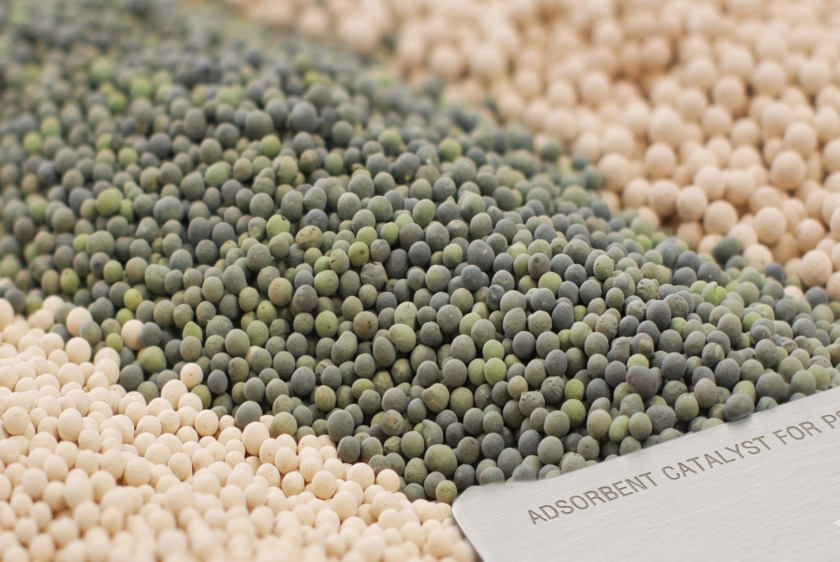
Sterling Analytical provides catalyst support and adsorbent testing, quantifying the trace metal impurities and elemental composition of the support materials underneath the active catalytic phase — alumina, zeolite, silica, carbon, and related adsorbents. Our ICP-OES testing serves catalyst manufacturers, support material suppliers, and process chemists who need to confirm that a support material is clean enough, structurally sound enough, and chemically consistent enough to perform as intended once the active metal is loaded onto it.
It’s easy to think of the support as inert scaffolding and the active metal as the only thing that matters, but that’s not how these systems actually work. The support’s surface area, pore structure, and trace impurity level all directly affect how well the active metal disperses across it, how accessible that metal is to reactants, and how the whole system holds up under thermal and chemical stress in service. A gamma-alumina support, for example, derives its catalytic usefulness from a high surface area (commonly in the 150–340 m²/g range) and an open pore structure that allows good metal dispersion — but gamma-alumina is a metastable phase that irreversibly transforms toward theta- and ultimately alpha-alumina under sustained heat, with surface area dropping by an order of magnitude or more in the process. A support’s trace alkali metal content (sodium, calcium, magnesium) is a well-documented factor in supplier-to-supplier support quality variation, since these impurities can neutralize acid sites and affect both fresh catalyst performance and long-term stability.
Support and adsorbent testing answers a different question than active-metal testing: not “how much platinum or palladium is on this catalyst,” but “is the material everything is built on actually clean and structurally what it’s supposed to be.”
Why Support Material Quality Matters
- Trace metal impurities affect dispersion and acidity. Alkali and alkaline earth metals (sodium, calcium, magnesium, potassium) in a support material can neutralize the acid sites that drive isomerization and cracking chemistry in many catalyst systems, and can also interfere with how evenly an active metal disperses during impregnation. Two batches of nominally identical alumina from different suppliers — or even different lots from the same supplier — can perform differently as a finished catalyst purely because of trace impurity differences invisible without elemental testing.
- Iron and transition metal contamination introduces unwanted chemistry. Iron, in particular, is a common contaminant in alumina and silica supports and can introduce its own catalytic activity (often undesirable side reactions) or contribute to deactivation mechanisms unrelated to the intended active metal.
- Silica-to-alumina ratio governs zeolite behavior. For zeolite-based supports and adsorbents, the silica-to-alumina ratio is a defining specification that directly affects acidity, thermal stability, and selectivity — verifying this ratio is as much a composition question as it is a structural one.
- Phase stability under heat is a composition-linked property. Gamma-alumina's transformation to lower-surface-area phases under thermal stress is influenced by trace impurities and synthesis conditions, which is part of why elemental consistency in a support material connects directly to how well a finished catalyst holds up across repeated regeneration cycles.
What We Test For
Our catalyst support and adsorbent testing panel covers the trace elements most relevant to support quality and performance:
- Sodium (Na) : Acid site neutralization, supplier quality variation
- Calcium (Ca) :Acid site neutralization, phase stability
- Magnesium (Mg) :Acid site neutralization, dispersion interference
- Potassium (K) : Acid site neutralization
- Iron (Fe) : Unwanted side chemistry, deactivation contribution
- Silicon (Si) : Composition verification for alumina supports; ratio determination for zeolites
- Aluminum (Al) : Composition verification, silica-to-alumina ratio determination
- Sulfur (S) : Residual synthesis chemical contamination
- Phosphorus (P) : Residual synthesis chemical contamination, acid site interaction
Additional elements can be added depending on the specific support material and the catalyst system it will ultimately carry. For zeolite materials, results can be reported alongside calculated silica-to-alumina ratio where useful.
Materials We Test
We analyze a range of catalyst support and adsorbent materials, including:
- Gamma, theta, and alpha alumina supports (pellets, extrudates, powders)
- Zeolite materials (ZSM-5, Y-zeolite, and related framework types) and zeolite/alumina composites
- Silica and silica-alumina supports
- Activated carbon supports and adsorbents
- Molecular sieve and other adsorbent materials used in gas or liquid purification applications
Each material type has its own characteristic impurity profile and quality considerations, so preparation and reporting are adapted to the specific support rather than applying a single generic panel across every matrix. A zeolite framework, for instance, is evaluated partly through its silica-to-alumina ratio, a compositional property with direct structural meaning, while an alumina extrudate is evaluated primarily through trace alkali and transition metal content against a background of an otherwise well-characterized, commercially standardized material.
Support Degradation vs. Active-Metal Poisoning: A Different Diagnostic Question
When a finished catalyst underperforms, it’s natural to look first at the active metal — has it been poisoned, lost, or redistributed. But the support beneath it can independently degrade or vary in ways that produce similar symptoms through an entirely different mechanism, and distinguishing the two matters for deciding what to do next.
Support-driven performance issues typically show up as one of a few patterns:
- Reduced metal dispersion from the start, traceable to support trace impurities (particularly alkali metals) interfering with how evenly active metal deposits during impregnation, rather than anything happening after the catalyst goes into service
- Accelerated thermal degradation, where a support's phase transformation under heat (such as gamma-to-theta-alumina conversion) proceeds faster than expected, often linked to trace impurity content or synthesis conditions, resulting in surface area and pore volume loss that limits how much active metal surface remains accessible over time
- Acid function drift independent of the active metal, where alkali contamination in the support neutralizes acid sites that work alongside the active metal in bifunctional catalyst systems — a pattern that can look similar to chloride imbalance in a reforming catalyst, for example, but originates in the support rather than the active phase
- Lot-to-lot performance inconsistency traced to support material variation between suppliers or batches, rather than anything in the active metal loading or impregnation process itself
This is a different diagnostic question than catalyst poisoning, where a contaminant actively binds to and blocks the working catalytic sites. Support testing is most useful as a complement to active-metal and poisoning panels — together, they help separate “the catalyst is poisoned” from “the catalyst was built on an inconsistent foundation,” which point toward very different corrective actions.
Who Uses This Service
- Catalyst manufacturers verifying incoming support material quality before committing it to active metal impregnation, where catching an out-of-spec support before processing avoids wasting active metal on a compromised base material.
- Support material suppliers providing independent verification of trace impurity specifications to their catalyst-manufacturer customers, supporting both QC documentation and customer confidence.
- Process chemists and catalyst technologists investigating whether inconsistent finished-catalyst performance traces back to support material variation rather than active metal loading or process conditions — a root-cause question that's easy to overlook if testing focuses only on the active metal.
- Adsorbent and purification system operators verifying the composition and trace contaminant profile of molecular sieves or other adsorbent media used in gas or liquid purification, where trace metal content can affect adsorption capacity or introduce contamination into the purified stream.
- Catalyst R&D teams characterizing experimental or novel support materials as part of catalyst development, where understanding baseline support composition is a prerequisite for interpreting how a new active metal system performs on it.
Sample Quantity & Handling
Required sample size: 5–10 grams of representative support or adsorbent material.
Packaging guidelines:
- Use sealed HDPE or polypropylene containers; avoid glass due to HF digestion compatibility where required for full silicate dissolution
- Ensure the sample is representative of the lot, particularly for materials sourced from multiple suppliers or batches
- Clearly label material type (alumina phase, zeolite framework type, etc.), lot/batch ID, and source
For supplier qualification or comparison testing, submitting samples from multiple lots or suppliers in the same batch helps establish a clearer picture of typical variation than testing a single sample in isolation.
Turnaround Time & Pricing
Standard turnaround: 3–5 business days Rush service: 24–48 hours available
Pricing starts from $150 per sample, depending on element panel and digestion complexity. Volume pricing available for routine supplier qualification programs.
What You Receive
Clients receive a detailed Certificate of Analysis (COA) suitable for incoming QC, supplier qualification, and root-cause investigation.
Your COA includes:
- Elemental composition (ppm) via ICP-OES
- Method references and digestion notes
- Reporting limits and analytical qualifiers
- Reporting limits and analytical qualifiers
- Batch-level quality control summary
All results are supported by CRM-traceable calibration, with duplicates and matrix spikes performed on each analytical batch.
Methods & Standards
Sterling Analytical applies established methods adapted for support and adsorbent materials:
- EPA 3052 – Microwave-assisted acid digestion
- SW-846 6010 – ICP-OES elemental analysis
- Calibration using certified reference materials (CRMs)
For physical property characterization (surface area, pore volume, pore size distribution) outside the scope of elemental analysis, these are typically assessed by nitrogen physisorption (BET) methods — let us know if your evaluation requires both elemental and physical characterization, and we can advise on scope.
Related Services
Explore related services:
- Catalyst Impurity Testing
- Catalyst Poisoning & Contamination Testing
- Spent Catalyst Precious Metal Recovery
- FCC Catalyst Analysis / E-Cat Metals Testing
- Pd/C Catalyst Metal Loading Testing
Request a Quote
Ready to verify your catalyst support or adsorbent material?
Submit your sample details to receive a fast quote and recommended analytical scope.
Frequently Asked Questions
It's used to quantify trace metal impurities and elemental composition in catalyst support materials — alumina, zeolite, silica, carbon — confirming the underlying material is clean and structurally consistent before or after active metal loading.
Poisoning involves a contaminant actively binding to and blocking active catalytic sites. Support degradation or impurity issues originate in the underlying material itself — through trace impurities affecting metal dispersion, accelerated thermal phase transformation, or acid site neutralization — producing similar performance symptoms through a different mechanism. Distinguishing the two points toward different corrective actions.
Yes. If active metal loading and process conditions appear consistent but finished catalyst performance varies, support material variation between suppliers or lots is a common, often-overlooked root cause worth ruling in or out.
Trace impurities in the support, particularly alkali and alkaline earth metals, can neutralize acid sites, interfere with active metal dispersion, and affect long-term thermal stability. Two otherwise identical supports can produce different finished catalyst performance based on trace composition alone.
Yes. Where applicable, results can be reported alongside calculated silica-to-alumina ratio, a key specification for zeolite-based catalysts and adsorbents.
No, this service covers elemental composition by ICP-OES. Physical properties like surface area and pore volume are typically assessed separately by nitrogen physisorption (BET) methods — let us know if you need both elemental and physical characterization and we can advise on scope.
Yes. Reports are supported by CRM-traceable calibration and quality control data designed to provide defensible, independently generated results.
Typically 5–10 grams of representative material.
Standard turnaround is 3–5 business days, with 24–48 hour rush service available.
Yes. Submitting multiple lots or suppliers together in the same batch helps establish a clearer picture of typical impurity variation than evaluating a single sample alone.
Quick Contact
If you have any questions or need help, feel free to contact with our team.
Send Us Email:
Call Us Today: