Phone:
(413) 214-6541
Location:
15 Agawam Ave West Springfield, MA 01089
Mon - Fri:
8.00am - 7.00pm
Parent Website:
sterlinganalytical.com

- Home
- About Us
- Tests & Services
Catalyst Analysis Services
- Catalyst Impurity Testing
- Spent Catalyst Analysis
- Spent Catalyst Precious Metal Recovery Assay
- Precious Metal Assay Lab
- FCC Catalyst Analysis / E-Cat Metals Testing
- Pd/C Catalyst Metal Loading Testing
- Platinum Reforming Catalyst Testing
- Catalyst Poisoning & Contamination Testing
- Catalyst Support & Adsorbent Testing
- Contact Us
- Sample Delivery Instructions
Lithium Carbonate Purity Testing
Related Posts
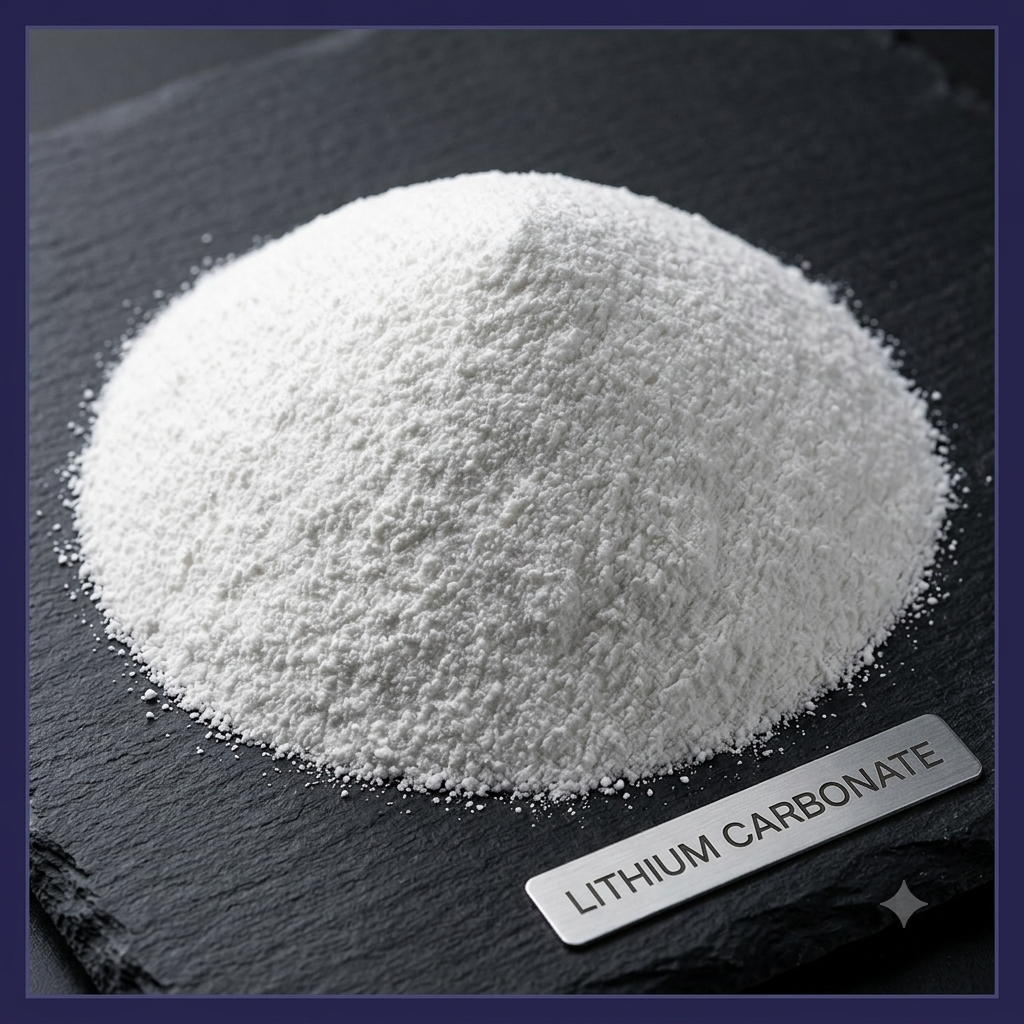
Sterling Analytical provides lithium carbonate purity testing combining direct lithium assay with low-level impurity profiling by ICP-OES, built around the controlled wet chemistry that accurate lithium carbonate analysis genuinely requires. Lithium carbonate (Li2CO3) dissolves readily in acid, which sounds like it should make this an easy material to test — but reliable results at low-level impurity thresholds depend on managing the reaction itself, not just running the sample through an instrument.
Our laboratory supports technical-grade material qualification, supplier verification, process and purification monitoring, and lot-to-lot consistency checks across the lithium carbonate supply chain — whether you’re a producer confirming product specification, a battery materials buyer screening incoming supply, or a process engineer tracking purification performance over time.
Matrix & Digestion
Lithium carbonate’s solubility is actually part of the challenge. Dissolving Li2CO3 in acid releases CO2 as the carbonate breaks down, and uncontrolled acid addition can cause vigorous effervescence — enough to spatter sample out of the vessel or lose material before it’s even fully in solution. Getting an accurate result starts with managing that reaction properly, not just choosing the right acid.
This isn’t a minor procedural detail. Sample loss during digestion is one of the more underappreciated sources of error in lithium carbonate testing specifically, because the failure mode is easy to miss — a digestion that loses a small amount of sample to spattering doesn’t look obviously wrong, it just produces a slightly low lithium result that can be mistaken for genuine material variation rather than a preparation artifact. Controlled, incremental acid addition manages the CO2 release rate so the reaction stays in the vessel rather than escaping it.
Sterling Analytical uses nitric acid-based dissolution with controlled addition to manage carbonate reactivity:
- Dilute nitric acid (HNO3) for complete dissolution
- Controlled, incremental acid addition to manage CO2 effervescence and prevent sample loss or spattering
- Clean labware and handling procedures to minimize contamination, which matters disproportionately at the low-ppm impurity levels this testing targets
- Matrix-matched calibration standards for accurate quantification
These procedures are what make lithium carbonate analysis reliable across both major assay (how much lithium is actually present) and low-level impurity measurement (what else came along with it) — two questions that get answered together but require slightly different care to get right.
Purity & Assay Considerations
Lithium carbonate purity testing covers both lithium assay and impurity profiling, and it’s worth understanding how the headline purity number is actually derived.
- Lithium (Li) is measured directly via ICP-OES — this is the real, measured quantity
- Li2CO3 purity (%) is then calculated from that lithium concentration using stoichiometric conversion — this is a derived number, not a direct measurement
That distinction matters in practice. The stoichiometric calculation assumes all measured lithium is present specifically as lithium carbonate. If other lithium salts are also present — lithium hydroxide (LiOH) or lithium sulfate (Li2SO4), for example — the stoichiometric conversion can overstate true carbonate purity, since it has no way of distinguishing which lithium-bearing compound the measured lithium actually came from. We report this limitation plainly rather than presenting a single purity percentage as more certain than the underlying chemistry supports. Where it matters for your application, results can be interpreted alongside process knowledge or complementary methods to confirm the lithium speciation assumption is reasonable for your specific material.
Impurity Profile (ICP-OES)
Our lithium carbonate analysis provides impurity profiling at low ppm levels, supporting:
- Technical-grade material qualification
- Supplier verification and incoming QC
- Process and purification monitoring
- Lot-to-lot consistency checks
Commonly reported elements include sodium (Na), potassium (K), calcium (Ca), magnesium (Mg), iron (Fe), aluminum (Al), silicon (Si), phosphorus (P), and sulfur (S).
- Alkali / alkaline earth metals (Na, K, Ca, Mg) : ~1–10 ppm
- Transition metals (Fe, etc.) : ~1–5 ppm
- Silicon and phosphorus : ~5–10 ppm
Why Impurity Profile Matters Beyond the Headline Purity Number
A lithium carbonate sample can show high overall purity while still carrying impurity levels that matter a great deal downstream, depending on what the material is destined for. Sodium and calcium, for instance, are relatively benign for many technical-grade applications but can interfere with downstream lithium hydroxide conversion processes. Iron and other transition metals are tracked closely because even small amounts can carry through into battery-grade material and affect electrochemical performance later in the supply chain, long after the original lithium carbonate purity check.
This is why we report the full impurity profile rather than a single purity number in isolation — the purity percentage tells you how much lithium is there, but the impurity breakdown tells you whether this specific material is actually fit for your specific downstream use.
Tracking Consistency Across Lots and Suppliers
A single purity result is a snapshot; the more useful picture usually comes from comparing results across multiple lots, shipments, or suppliers over time. Lithium carbonate sourced from different producers, or even different production runs from the same producer, can show meaningfully different impurity fingerprints even when both pass the same headline purity specification.
This matters in a few concrete ways. A buyer qualifying a new supplier benefits from testing several lots before committing to volume purchasing, since a single favorable result doesn’t guarantee consistency going forward. A producer running a purification process benefits from trending impurity results over time, since a gradual drift in one or two specific elements often shows up well before it would affect the headline purity number enough to trigger an out-of-spec result on its own. And a buyer managing multiple suppliers benefits from a consistent, independent testing methodology applied across all of them, since comparing supplier A’s in-house results against supplier B’s in-house results isn’t really an apples-to-apples comparison unless both were generated the same way.
We’re happy to discuss a recurring testing arrangement for clients managing ongoing supplier qualification or process monitoring programs, rather than treating each submission as an isolated one-off request.
Battery-Grade Material Context
Battery-grade lithium carbonate is typically specified with impurity limits for certain elements — especially iron and other transition metals — at sub-ppm or ppb levels, well below what technical-grade specifications require.
ICP-OES provides robust impurity profiling at low ppm levels and is well suited for process control, supplier screening, and technical-grade evaluation. However, ultra-trace determination of critical metals at sub-ppm levels (hundreds of ppb and below) typically requires ICP-MS.
For clients requiring battery-grade certification against strict cathode or producer specifications, ICP-MS analysis may be recommended (available via partner or future capability). This approach keeps results aligned with the analytical sensitivity your application actually needs, rather than either under-testing against a tight specification or over-testing material where ICP-OES-level precision is already more than sufficient.
Who Uses This Service
- Lithium carbonate producers confirming finished product meets specification before shipment, with both assay and impurity data backing the certificate of analysis.
- Battery materials buyers and procurement teams screening incoming lithium carbonate supply against purchase specifications, particularly when qualifying a new supplier or evaluating multiple sources.
- Process and purification engineers tracking how effectively a purification step is removing specific impurities, using lot-over-lot impurity trend data rather than a single pass/fail check.
- Battery-grade material converters using technical-grade lithium carbonate as feedstock, where understanding the full impurity profile of incoming material helps predict how it will perform through downstream conversion to battery-grade product.
- Traders and intermediaries requiring independent, defensible purity and impurity data to support a transaction between a producer and an end buyer.
Sample Quantity & Packaging
Required sample size: 2–10 grams of lithium carbonate.
Packaging guidelines:
- Use clean, sealed HDPE or polypropylene containers
- Avoid contamination from glass or metal tools
- Ensure sample is dry and homogeneous
- Clearly label grade and lot number
Proper handling is critical for reliable lithium carbonate purity testing, especially at low impurity levels where even minor contamination during sampling or packaging can meaningfully shift a result.
Turnaround Time & Pricing
Standard turnaround: 2–4 business days Rush service: 24–48 hours available
Lithium carbonate analysis starts from $100–$150 per sample, depending on impurity panel and reporting requirements.
What You Receive
Clients receive a Certificate of Analysis (COA) suitable for process control, supplier qualification, and technical evaluation.
Your COA includes:
- Lithium concentration and calculated Li2CO3 purity (%)
- Impurity profile (ppm)
- Method references and preparation notes
- Reporting limits and analytical qualifiers
- Lot-based quality control summary
All results are supported by CRM-traceable calibration, with duplicates and matrix spikes performed on each analytical batch.
Methods & Standards
Sterling Analytical applies established methods adapted for lithium salts:
- ICP-OES elemental analysis (SW-846 6010 framework)
- Nitric acid dissolution with controlled carbonate reaction
- Calibration using certified reference materials (CRMs)
Method adaptations ensure accurate lithium quantification and consistent impurity profiling across the range of grades and sources this material comes in.
Related Services
Explore related services:
- Lithium Hydroxide Purity Testing
- Black Mass Analysis
- Battery Grade Lithium Chloride Testing
- Recycled Lithium Salt Analysis
- Spodumene Concentrate Testing
You can also explore our broader Battery Materials Testing services for related capabilities across the battery materials supply chain.
Request a Quote
Ready to get started with lithium carbonate purity testing?
Submit your sample details to receive a fast, no-obligation quote. Our team will confirm pricing, turnaround time, and analytical scope.
Frequently Asked Questions
It's used to determine lithium content and impurity levels for supplier qualification, process monitoring, and material screening.
Purity is calculated from measured lithium concentration using stoichiometric conversion, assuming lithium is present as carbonate. If other lithium salts are present, this calculation can overstate true carbonate purity.
ICP-OES supports impurity profiling at low ppm levels. For sub-ppm or ppb-level impurity requirements typical of battery-grade specifications, ICP-MS is generally required.
Elements such as sodium, calcium, and iron can affect downstream processing and final material performance, even when overall lithium purity looks high.
Standard turnaround is 2–4 business days, with expedited options available.
Uncontrolled acid addition to lithium carbonate can cause vigorous effervescence strong enough to spatter sample out of the digestion vessel. The resulting sample loss produces a result that looks like a slightly low lithium reading rather than an obvious error, which is why controlled, incremental acid addition is a core part of getting an accurate result rather than just a procedural formality.
This often comes down to lithium speciation. The stoichiometric calculation assumes all measured lithium is present as carbonate; if the material contains other lithium salts, two labs measuring the same total lithium content can report different calculated purity depending on how that assumption is applied or qualified.
Yes, within the sensitivity range ICP-OES supports. For ultra-trace battery-grade limits below what ICP-OES can reliably detect, ICP-MS analysis can be arranged.
Quick Contact
If you have any questions or need help, feel free to contact with our team.
Send Us Email:
Call Us Today: