Phone:
(413) 214-6541
Location:
15 Agawam Ave West Springfield, MA 01089
Mon - Fri:
8.00am - 7.00pm
Parent Website:
sterlinganalytical.com

- Home
- About Us
- Tests & Services
Catalyst Analysis Services
- Catalyst Impurity Testing
- Spent Catalyst Analysis
- Spent Catalyst Precious Metal Recovery Assay
- Precious Metal Assay Lab
- FCC Catalyst Analysis / E-Cat Metals Testing
- Pd/C Catalyst Metal Loading Testing
- Platinum Reforming Catalyst Testing
- Catalyst Poisoning & Contamination Testing
- Catalyst Support & Adsorbent Testing
- Contact Us
- Sample Delivery Instructions
Platinum Reforming Catalyst Testing
Related Posts
Sterling Analytical provides platinum reforming catalyst testing, quantifying platinum, rhenium, and the contaminant and modifier elements that govern performance on naphtha reforming catalysts. Our ICP-OES testing supports refinery process engineers and catalyst technologists managing platforming or CCR (continuous catalyst regeneration) units, where catalyst condition directly drives octane yield, hydrogen production, and run length between regenerations.
Modern reforming catalysts are bimetallic or trimetallic systems — platinum paired with rhenium, tin, or iridium on a chlorided alumina support — engineered with a specific metal ratio and chloride level to balance the catalyst’s two functions: the metal sites that drive dehydrogenation chemistry, and the acid sites, governed by chloride content, that drive isomerization and cracking. Both functions have to stay in balance for the catalyst to perform as designed, and both can drift over time in service. Platinum and rhenium content typically sit in the range of roughly 0.2 to 0.7 weight percent each, with chloride controlled to a comparatively narrow band, since both over- and under-chlorided catalyst cause real operating problems. Where tin is used instead of rhenium, it plays a different structural role — limiting platinum agglomeration during regeneration rather than directly catalyzing reforming chemistry, which is one reason Pt-Sn and Pt-Re catalysts behave differently under the same testing panel.
Catalyst condition in a CCR unit is also a moving target in a way it isn’t for fixed-bed reforming. Catalyst circulates continuously between the reactors and a dedicated regeneration section, where coke is burned off and the catalyst is oxychlorinated to redisperse platinum that has agglomerated under reaction heat, before being dried and reduced back to active form. A sample pulled from a CCR unit can sit anywhere along that cycle, and where it was pulled changes what a “normal” result looks like — which is part of why interpreting reforming catalyst data well requires more than running the metals panel.
Testing this catalyst is less about confirming a single number and more about confirming that the whole system — metal loading, metal ratio, chloride balance, and where the sample sits in its regeneration cycle — is still where it needs to be.
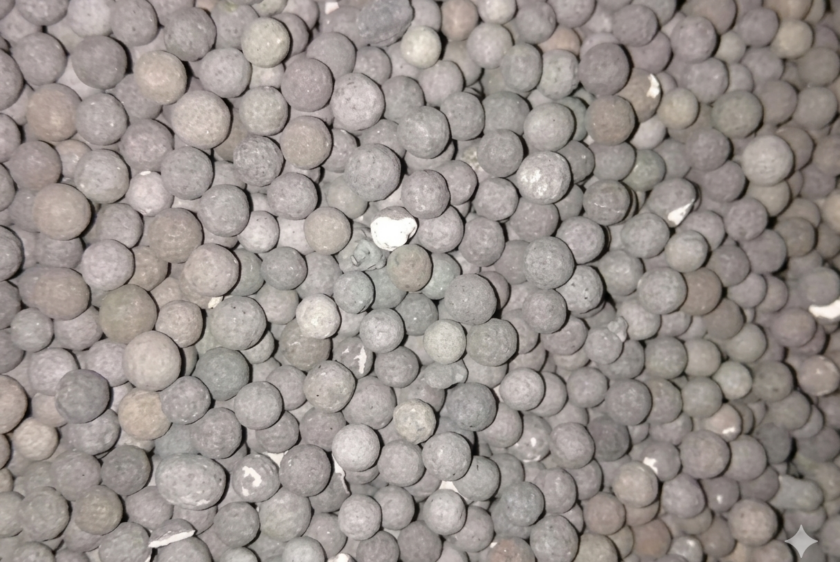
Matrix & Digestion
Reforming catalyst is a chlorided alumina support carrying platinum, rhenium, and any secondary metal (tin or iridium, depending on catalyst generation) at relatively low weight percent levels, alongside controlled trace modifiers. Accurate digestion has to fully recover the platinum group metals from the alumina matrix without losing volatile species or introducing contamination from the chloride-rich support itself.
Sterling Analytical applies digestion strategies suited to this matrix:
- Multi-acid digestion (aqua regia-based) for dissolution of platinum and rhenium.
- Hydrofluoric acid (HF) where required to fully break down the alumina support
- Closed-vessel microwave digestion to prevent loss of volatile rhenium species, which can be lost during open-vessel digestion if conditions aren't controlled
- Separate chloride determination, since chloride is typically measured by a different method than the metals panel and is not reliably captured by standard ICP-OES digestion
For spent or carbon-fouled catalyst pulled from a unit, oxidative pretreatment may be applied to remove coke deposits that can otherwise interfere with metal recovery.
Elements & Properties Reported
- Platinum (Pt): 0.1–1.0 wt%
- Rhenium (Re): 0.1–1.0 wt% (where present)
- Tin (Sn) or Iridium (Ir): Low wt% (catalyst-dependent)
- Chloride (Cl): 0.5–1.5 wt%
- Sodium (Na): Low ppm
- Iron (Fe): Low ppm
- Sulfur (S): Low ppm
Pt:Re (or Pt:Sn, Pt:Ir) ratio is reported alongside individual metal content, since the ratio — not just total metal loading — is often what the catalyst was specifically engineered around. Additional contaminant or modifier elements (silicon, calcium, magnesium) can be added depending on catalyst formulation and process concern.
Why Metal Ratio and Chloride Balance Matter as Much as Total Loading
A reforming catalyst reading correct total platinum content can still be functionally off-spec if the metal ratio or chloride level has drifted.
Metal ratio: Pt:Re and other bimetallic ratios are engineered deliberately, not incidentally — a shift in that ratio, even with total metal loading unchanged, can alter selectivity and stability in ways a single-element platinum result won’t reveal. Rhenium‘s main role alongside platinum is improving stability against coking and deactivation; a catalyst that’s lost rhenium relative to platinum may show normal initial activity but shorter run length before the next regeneration is needed.
Chloride balance: Chloride content governs the acid function of the catalyst. Catalyst running chloride-low tends to lose isomerization and cracking activity, showing up as lower octane gain for a given severity; chloride-high catalyst can over-crack feed, reduce liquid yield, and accelerate certain deactivation pathways. Chloride balance shifts gradually with water and chloride injection rates in the unit, which is why it’s tracked as a routine operating parameter, not just checked reactively after a yield problem shows up.
Contaminant sensitivity: Reforming catalyst, particularly platinum–rhenium systems, can be notably sensitive to feed sulfur — even low part-per-million sulfur levels in feed can measurably affect catalyst performance and selectivity, which is why sulfur is tracked alongside the primary metals panel rather than treated as a minor afterthought. Sodium and other alkali contamination, often carried in from upstream desalting or hydrotreating, can also neutralize acid sites in a way that mimics chloride-low behavior even when chloride itself tests within range — another reason a full contaminant panel gives a more reliable diagnosis than testing platinum alone.
Common Catalyst Condition Issues Identified
During platinum reforming catalyst testing, we frequently help identify:
- Pt:Re or Pt:Sn ratio drift relative to fresh catalyst specification
- Chloride imbalance trending high or low relative to target operating range
- Sodium or iron accumulation affecting acid site availability
- Sulfur contamination tied to feed desulfurization performance
- Metal loss or redistribution patterns across regeneration cycles in CCR units
These patterns are most useful when tracked over time against fresh catalyst baseline data, rather than evaluated from a single sample in isolation.
How Regeneration Affects What "Normal" Looks Like
In a CCR unit, catalyst regeneration follows a defined sequence: coke is burned off in air, the catalyst is oxychlorinated to redisperse platinum that has agglomerated under reaction heat back into small, evenly distributed particles, and the catalyst is then dried and reduced with hydrogen before returning to the reactors. Each step is necessary, and each step temporarily changes the catalyst’s chloride and oxidation state.
This matters for testing in a specific way: a sample pulled from the regeneration section partway through this sequence will show a different chloride level and metal oxidation state than a sample pulled from the reactor circuit, and that difference reflects normal process operation rather than a catalyst problem. Without knowing where in the cycle a sample was taken, a chloride result that looks “off” against a single fixed target can be misread. This is why we ask for sample source and cycle position rather than evaluating every sample against one static specification.
Tin-promoted catalysts add a further wrinkle: tin’s primary role is limiting platinum agglomeration during the high-temperature regeneration step, rather than directly driving reforming chemistry the way rhenium does. A Pt-Sn catalyst and a Pt-Re catalyst pulled from the same point in a regeneration cycle can show meaningfully different expected metal and chloride profiles, which is part of why catalyst generation and metal system are worth confirming at the time of sample submission.
Who Uses This Service
- Refinery process engineers monitor reforming catalyst condition against octane yield and hydrogen production targets, using metals and chloride trends to distinguish catalyst-driven performance shifts from feed or operating condition changes.
- Catalyst technologists validate metal ratio and chloride balance across regeneration cycles in CCR units, often comparing samples pulled at consistent points in the cycle to build a reliable trend rather than relying on isolated spot checks.
- Reforming unit operators investigate unexpected shifts in yield, activity, or run length, using catalyst testing as one input alongside process data to localize whether an issue traces back to catalyst condition or unit operation.
- Catalyst suppliers benchmark field catalyst condition against fresh catalyst specification, supporting both performance guarantees and end-of-life replacement decisions.
- Refinery turnaround and catalyst change-out planners use metals and chloride data to assess remaining catalyst life and time replacement decisions around planned maintenance windows.
Sample Quantity & Handling
Required sample size: 5–10 grams of representative catalyst (typically pelletized or extrudate form).
Packaging guidelines:
- Use sealed HDPE or polypropylene containers; avoid glass due to HF digestion compatibility
- Ensure the sample is well-mixed and representative — for CCR units, note where in the regeneration cycle the sample was pulled, since this affects expected chloride and coke levels
- Clearly label sample date, unit/source, catalyst generation, and any known recent process changes
If you’re testing a used or partially deactivated catalyst rather than fresh material, let us know — used catalyst can carry additional organic residue that affects digestion approach.
Turnaround Time & Pricing
Standard turnaround: 3–5 business days Rush service: 24–48 hours available
Pricing starts from $150 per sample, depending on element panel and whether chloride determination is included. Volume pricing available for routine monitoring programs.
What You Receive
Clients receive a detailed Certificate of Analysis (COA) suitable for process monitoring, catalyst management decisions, and unit troubleshooting.
Your COA includes:
- Platinum and rhenium (or secondary metal) concentration (wt%) via ICP-OES
- Pt:Re or relevant metal ratio.
- Chloride content
- Contaminant and modifier element results
- Reporting limits, analytical qualifiers, and digestion notes
- Batch-level quality control summary
All results are supported by CRM-traceable calibration, with duplicates and matrix spikes performed on each analytical batch.
Methods & Standards
Sterling Analytical applies established methods adapted for platinum–rhenium and related reforming catalyst materials:
- EPA 3052 – Microwave-assisted acid digestion
- SW-846 6010 – ICP-OES elemental analysis
- Chloride determination by appropriate complementary method
- Calibration using certified reference materials (CRMs)
Related Services
Explore related services:
Request a Quote
Ready to get started with platinum reforming catalyst testing?
Submit your sample details to receive a fast quote. Our team will confirm pricing, turnaround, and recommend a sampling approach for routine or one-time monitoring.
Frequently Asked Questions
It's used to quantify platinum, rhenium (or other secondary metal), and chloride content on naphtha reforming catalysts, supporting process monitoring, catalyst management, and unit troubleshooting.
Pt:Re and similar bimetallic ratios are engineered deliberately to balance catalyst selectivity and stability. A ratio shift can change catalyst behavior even when total metal loading is unchanged, so reporting the ratio gives a more complete diagnostic picture than platinum content alone.
Chloride content governs the acid function of the catalyst, which works alongside the metal function to drive reforming chemistry. Chloride-low or chloride-high catalyst both cause real performance issues, so it's tracked as a core operating parameter rather than an afterthought.
Platinum-rhenium reforming catalysts can be sensitive to even low part-per-million sulfur levels in feed, which is why sulfur is tracked alongside the primary metals panel.
5–10 grams of representative catalyst is typically sufficient.
Standard turnaround is 3–5 business days, with 24–48 hour rush service available.
Yes. Let us know if the sample has seen prior use, since organic residue from reaction exposure can affect digestion approach.
Standard turnaround is 3–5 business days, with 24–48 hour rush service available.
Catalyst chloride level and metal oxidation state change through the regeneration sequence (coke burn, oxychlorination, drying, reduction). A sample pulled mid-cycle will show different values than one pulled from the reactor circuit, and that difference reflects normal operation rather than a problem — which is why we ask for sample source and cycle position.
Rhenium directly contributes to reforming chemistry and catalyst stability, while tin's main role is limiting platinum agglomeration during regeneration. The two systems have different expected metal and chloride profiles, so confirming catalyst generation at submission helps with accurate interpretation.
Yes. Note where in the cycle the sample was pulled, since expected chloride and coke levels vary through the regeneration process.
Quick Contact
If you have any questions or need help, feel free to contact with our team.
Send Us Email:
Call Us Today: