Phone:
(413) 214-6541
Location:
15 Agawam Ave West Springfield, MA 01089
Mon - Fri:
8.00am - 7.00pm
Parent Website:
sterlinganalytical.com
- Home
- About Us
- Tests & Services
Catalyst Analysis Services
- Catalyst Impurity Testing
- Spent Catalyst Analysis
- Spent Catalyst Precious Metal Recovery Assay
- Precious Metal Assay Lab
- FCC Catalyst Analysis / E-Cat Metals Testing
- Pd/C Catalyst Metal Loading Testing
- Platinum Reforming Catalyst Testing
- Catalyst Poisoning & Contamination Testing
- Catalyst Support & Adsorbent Testing
- Contact Us
- Sample Delivery Instructions
FCC Catalyst Analysis / E-Cat Metals Testing
Related Posts
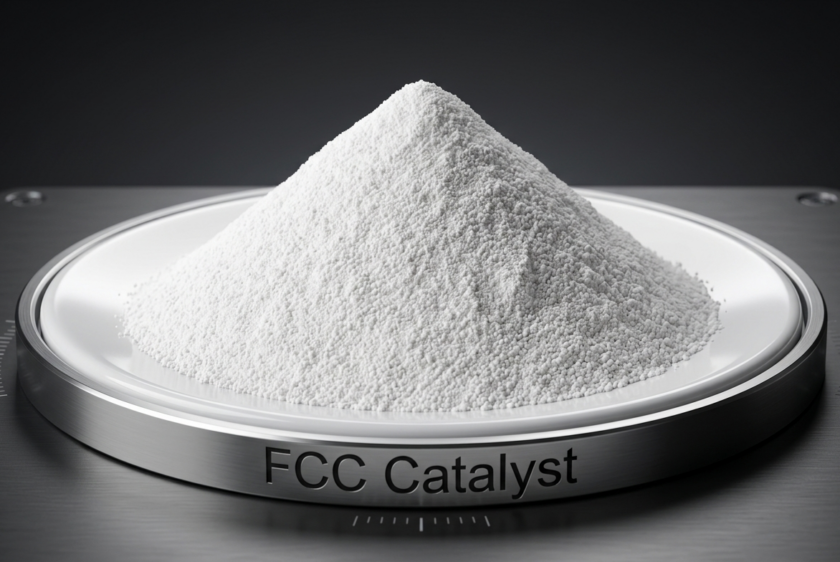
Sterling Analytical provides FCC catalyst analysis and equilibrium catalyst (e-cat) metals testing, quantifying the contaminant metals that drive catalyst deactivation, selectivity loss, and yield shift in fluid catalytic cracking units. Our ICP-OES testing delivers the data refinery process engineers and catalyst technologists rely on to track unit performance, set catalyst addition rates, and diagnose unexpected changes in conversion or product slate.
Precious metal value concentrates in small fractions of a much larger material, which means the analytical method has to match the matrix and concentration level, not just the element being measured. A gold ore sample, a catalytic converter scrap lot, and a refinery sweep all behave differently during digestion or fire assay, and treating them the same way is one of the most common sources of inaccurate valuation in this industry. A digestion strategy tuned for silicate-hosted gold ore will not necessarily recover platinum group metals locked in a ceramic catalyst support, and a method validated for percent-level scrap can produce misleading results on a low-grade tailings sample.
FCC catalyst doesn’t fail suddenly — it degrades gradually as feedstock contaminant metals deposit on the catalyst surface and migrate through the particle over thousands of regeneration cycles. Nickel and vanadium are the two metals refiners watch most closely, but they don’t behave the same way: nickel promotes dehydrogenation and coking with comparatively little structural damage, while vanadium, especially under the hydrothermal conditions of the regenerator, is far more destructive to zeolite structure and acid site density. Iron, sodium, and calcium add further complexity, and total contaminant metal level correlates closely with measurable shifts in slurry yield and conversion.
Routine e-cat metals testing turns that slow, often invisible degradation into a trackable trend — so catalyst makeup rate, feed selection, and unit operating decisions can be made on data rather than guesswork.
Matrix & Digestion
Equilibrium catalyst is a demanding matrix: a calcined zeolite-in-alumina or zeolite-in-silica particle, carrying contaminant metals partly on the surface and partly diffused into the pore structure after extended time on stream. Nickel tends to concentrate near the particle surface, while vanadium distributes more uniformly through the particle — a distinction that matters for digestion, since a method optimized for surface metal alone can systematically underreport vanadium.
Sterling Analytical uses microwave-assisted acid digestion designed to fully access both surface and embedded contaminant metals:
- Multi-acid digestion (HNO3/HCl-based) for dissolution of nickel, vanadium, iron, and base metal contaminants
- Hydrofluoric acid (HF) to fully break down the zeolite and alumina/silica matrix.
- Oxidative treatment where coke loading on spent or partially regenerated samples could otherwise shield contaminant metals from digestion
Closed-vessel digestion ensures consistent recovery across fresh catalyst, equilibrium catalyst pulled from the unit, and catalyst at varying points in its regeneration cycle.
Elements Reported & Typical Reporting Limits
Our FCC catalyst analysis covers the contaminant metals most directly tied to deactivation mechanisms and unit performance.
- Nickel (Ni) : 5ppm
- Vanadium (V) : 5ppm
- Sodium (Na) : 5ppm
- Calcium (Ca) : 5ppm
- Antimony (Sb) : 5ppm
- Magnesium (Mg) : 5ppm
- Phosphorus (P) : 5ppm
Nickel, vanadium, iron, sodium, and calcium are typically reported in combination as “total metals,” since contaminant metal trends are most useful when tracked together rather than element by element. Additional elements, including antimony for vanadium-passivation programs, can be added depending on your unit’s feed slate and catalyst management strategy.
Why Nickel and Vanadium Don't Behave the Same Way
Nickel and vanadium are usually discussed together as “Ni+V” contaminant loading, but they drive different deactivation mechanisms, and reporting them only as a combined total can obscure what’s actually happening in the unit.
Nickel concentrates closer to the catalyst particle surface and primarily promotes dehydrogenation reactions, increasing hydrogen and coke yield with comparatively limited damage to catalyst structure. Vanadium, particularly under the hydrothermal conditions present in the regenerator, distributes more evenly through the particle and is significantly more destructive to zeolite framework and acid site density — it’s the metal most responsible for irreversible activity loss as e-cat ages.
Reporting nickel and vanadium individually, alongside iron, sodium, and calcium, gives a clearer diagnostic picture than a single combined metals number, particularly when troubleshooting an unexpected shift in conversion, coke yield, or product slate.
Common Catalyst Deactivation Patterns Identified
During FCC catalyst and e-cat analysis, we frequently help identify:
- Step changes in total contaminant metals tied to a feedstock change or upstream blending shift
- Vanadium-driven activity loss disproportionate to total Ni+V loading
- Iron deposition patterns associated with reduced acid site availability and altered bottoms yield
- Metals trends that help establish or validate catalyst makeup rate and addition strategy
These patterns are easiest to catch with routine, trended e-cat sampling rather than one-off testing after a problem has already shown up in unit performance.
Who Uses This Service
- Refinery process engineers tracking contaminant metal trends against conversion, coke yield, and slurry yield
- Catalyst technologists setting and validating catalyst makeup and addition rates
- FCC unit operators investigating unexpected shifts in product slate or activity
- Catalyst suppliers benchmarking catalyst performance against contaminant metal loading in the field
Sample Quantity & Handling
Required sample size: 5–10 grams of representative catalyst, typically pulled from the regenerator or as a routine unit sample.
Packaging guidelines:
- Use sealed HDPE or polypropylene containers; avoid glass due to HF digestion compatibility
- Ensure the sample is well-mixed and representative — e-cat composition can vary meaningfully across a single pull depending on where in the unit it was taken
- Clearly label sample date, unit/source, and any known feed changes around the sampling window, since this context is often what makes a metals trend interpretable
For trend tracking, routine sampling on a consistent schedule (weekly or monthly, depending on unit feed variability) provides far more diagnostic value than occasional one-off samples.
Turnaround Time & Pricing
Standard turnaround: 3–5 business days Rush service: 24–48 hours available
Pricing starts from $150 per sample, depending on element panel and digestion complexity. Volume pricing and routine trending programs are available for refineries running scheduled e-cat monitoring.
What You Receive
Clients receive a detailed Certificate of Analysis (COA) suitable for process monitoring, catalyst management decisions, and unit troubleshooting.
Your COA includes:
- Elemental composition (ppm) via ICP-OES, including individual Ni, V, Fe, Na, and Ca results
- Method references and digestion notes
- Reporting limits and analytical qualifiers
- Batch-level quality control summary
All results are supported by CRM-traceable calibration, with duplicates and matrix spikes performed on each analytical batch — important when results feed directly into catalyst makeup rate decisions.
Methods & Standards
Sterling Analytical applies established methods adapted for FCC catalyst and equilibrium catalyst materials:
- EPA 3052 – Microwave-assisted acid digestion
- SW-846 6010 – ICP-OES elemental analysis
- Calibration using certified reference materials (CRMs)
Related Services
Explore related services:
- Spent Catalyst Analysis
- Catalyst Impurity Testing
- Catalyst Poisoning & Contamination Testing
- Platinum Reforming Catalyst Testing
- Catalyst Support & Adsorbent Testing
Request a Quote
Ready to get started with FCC catalyst or e-cat metals testing?
Submit your sample details to receive a fast quote. Our team will confirm pricing, turnaround, and recommend a sampling schedule if you’re setting up routine trend monitoring.
Frequently Asked Questions
It's used to quantify contaminant metals — primarily nickel, vanadium, iron, sodium, and calcium — that accumulate on FCC catalyst during unit operation, supporting catalyst management, troubleshooting, and process monitoring.
They drive different deactivation mechanisms. Nickel mainly promotes dehydrogenation and coking with limited structural damage, while vanadium is significantly more destructive to zeolite structure under regenerator conditions. Reporting them separately gives a clearer diagnostic picture than a combined total.
Trended contaminant metal data shows how quickly metals are accumulating relative to catalyst addition, helping establish or validate the makeup rate needed to maintain target activity and selectivity.
5–10 grams of representative catalyst is typically sufficient, ideally pulled consistently from the same unit location for trend comparability.
Routine sampling, weekly or monthly depending on feed variability, provides far more diagnostic value than occasional one-off testing, since trends are usually more informative than a single data point.
Standard turnaround is 3–5 business days, with 24–48 hour rush service available.
Quick Contact
If you have any questions or need help, feel free to contact with our team.
Send Us Email:
Call Us Today: